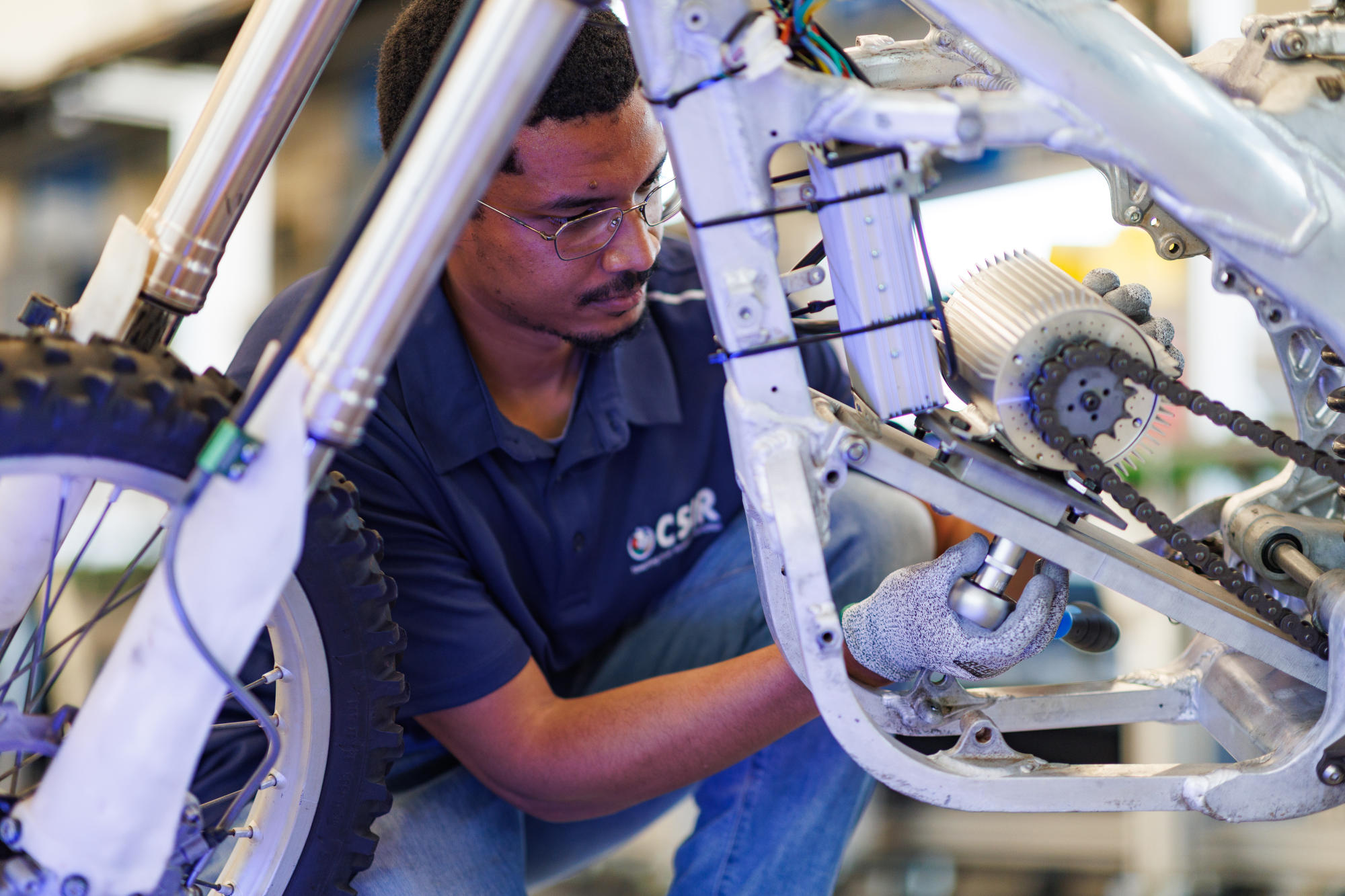
CSIR researchers are experimenting with concepts for rugged, modular bikes and trikes that run on electric motors. From ride-hailing services to mobile businesses like soup kitchens and waste collection, these micromobility vehicles could kickstart South Africa’s shift away from internal combustion engines (ICE) that pollute, while spurring local component manufacture and after-market servicing.
Chanel Schoeman, a CSIR principal engineer, says that whereas traditional ICE vehicles require up to 2 000 complex parts to build, a modular electric vehicle (EV) needs less than half of that.
The modular aspect refers to many of the parts being interchangeable in a plug-and-play fashion: fit-for-purpose load configurations, suspension, braking systems, control and communication, and eventually battery packs, could be locally manufactured, fitted to the basic chassis and serviced locally as needed.
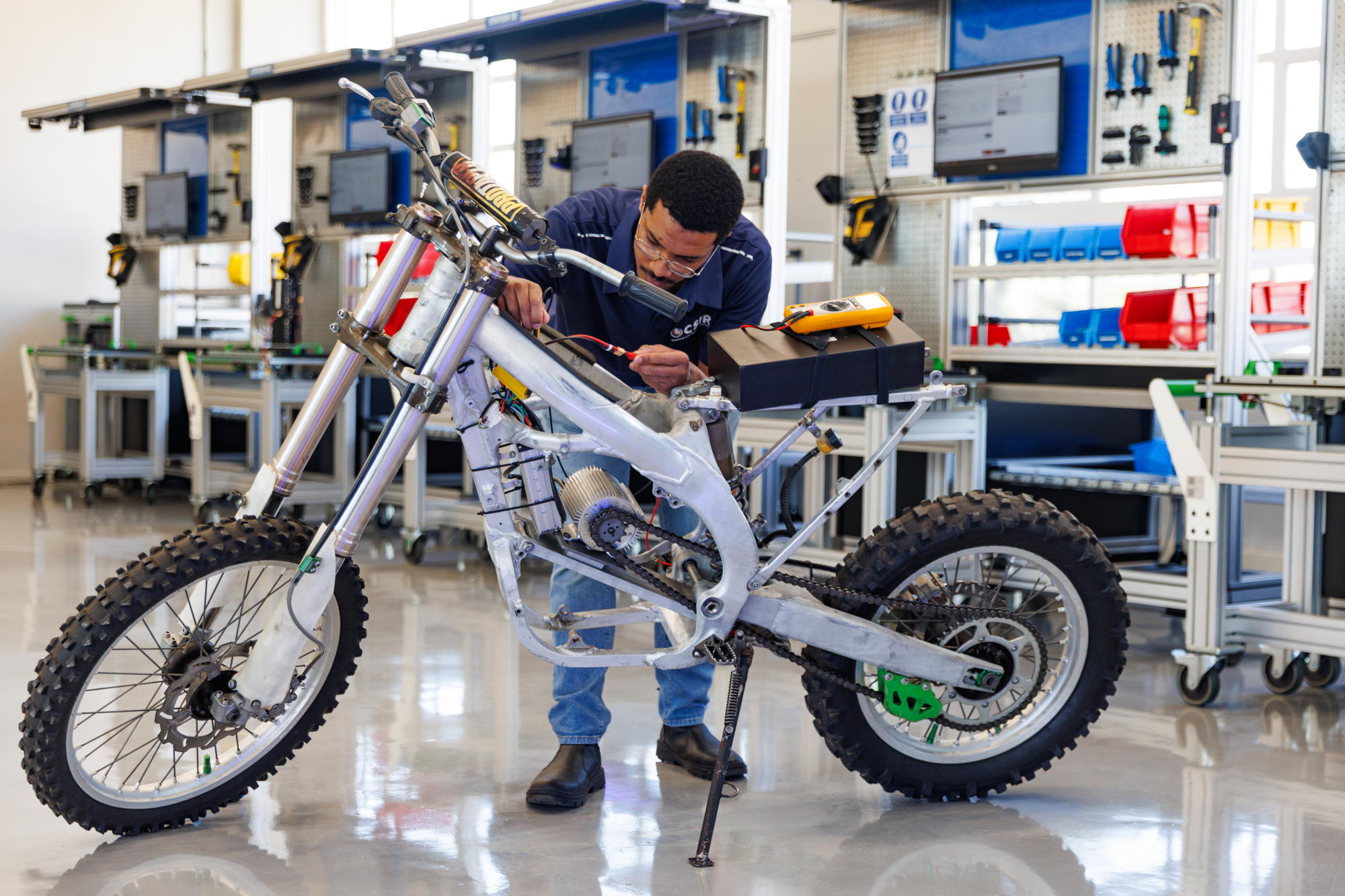
"The idea is to get to a vehicle using off-the-shelf components with the view that at some point down the line we would have most components developed locally," says Schoeman. "We also want to make this completely agnostic to the battery chemistry. So, for example, now we have lithium-ion batteries, but if sodium batteries become the norm, we should be able to swap out to the new battery chemistry if it conforms to the modular design specifications," says CSIR engineer Danny Naicker.
Besides experimenting on two- and three-wheel modifications, Schoeman says, the team is working on a four-wheeler concept with thick, pot-hole resistant tyres and a sturdy but lightweight metal frame. Such micromobility vehicles have strong market potential in areas as diverse as ride hailing, neighbourhood watch services, anti-poaching, soup kitchens and even recycling collection.
However, Schoeman stresses that the CSIR’s role in advancing modular EV technologies is not to compete with industry, but to provide technology and industry tools, designs, roadmaps and other evidence-based solutions to reduce innovation risks for local businesses, and to foster connections between them.
“Different manufacturers are at different stages, and each company needs a specific intervention that might be different from the next,” says Schoeman.
Prototyping these modular micromobility vehicles, therefore, forms part of a larger mission to support and develop the entire micromobility value chain and ecosystem in South Africa, and to make sure the needs of South African manufacturers and drivers are met.
She explains that her team has been engaging with multiple local companies involved in micromobility, general automotive manufacturing and distribution to inform the direction of their EV technology development.
They found that innovation in larger EV passenger vehicles is mostly dictated by the original equipment manufacturers and takes many years. But in the electric micromobility sector, South Africa could develop its own technologies and manufacture its own parts without such restrictions.
“With electric two-, three- and four-wheelers, which fall into category L (light mobility) vehicles, we have a lot more opportunity to influence the shift to electric vehicles than we do with typical passenger cars,” says Schoeman.
However, local companies face several barriers to this shift, including capital constraints, a reliance on imported Chinese components, and integration difficulties due to language and software barriers.
Some of these challenges, says Schoeman, could be alleviated by setting up production facilities within special economic zones to leverage existing infrastructure and provide shared access to manufacturing equipment. After-sales support could also be bolstered through containerised service and maintenance units, enabling localised repair, charging, tracking services and even battery swapping.
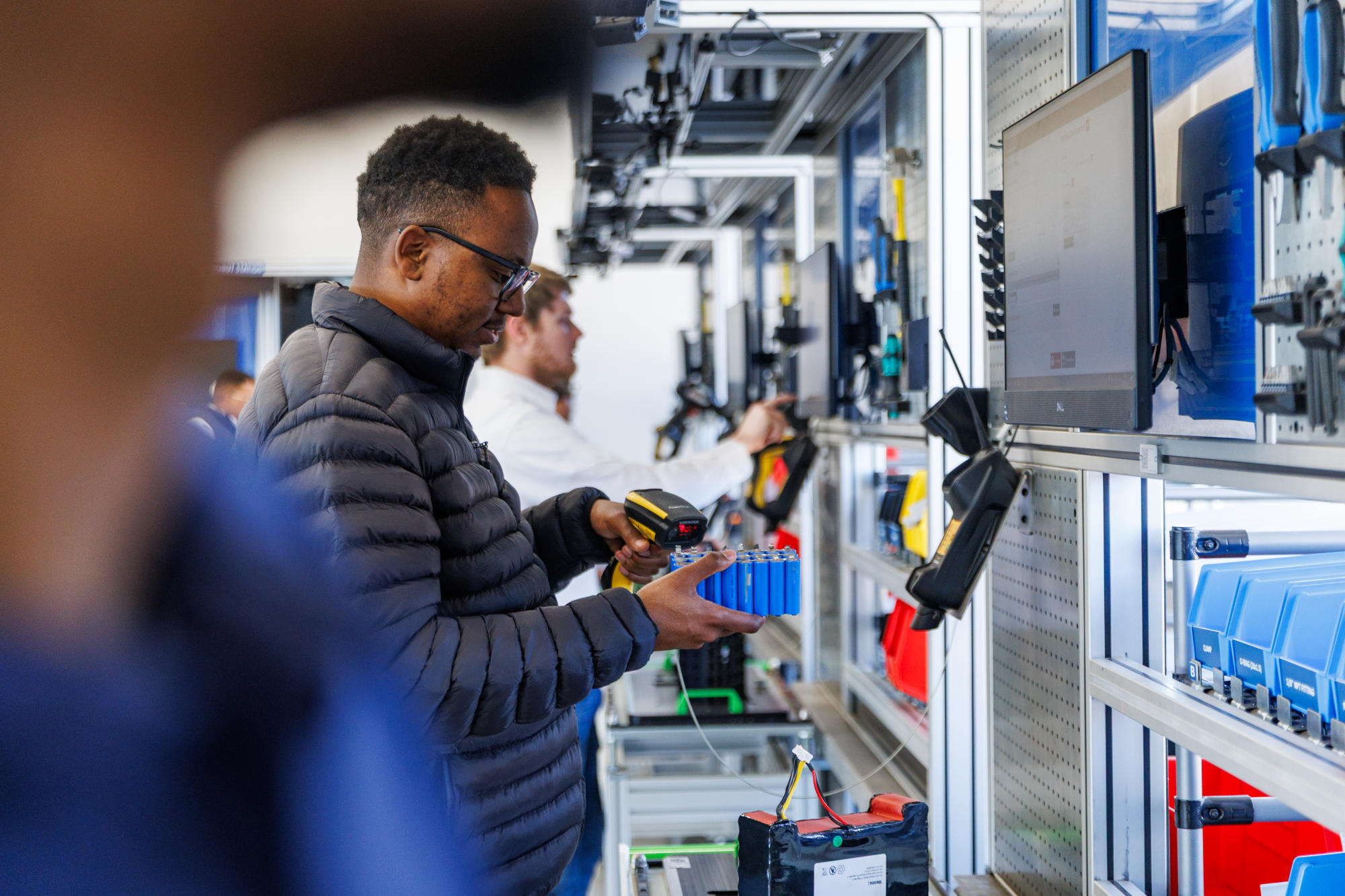
“One of the business models we’re considering for local companies is a battery-leasing option, where they would sell the vehicle without the battery to reduce the upfront cost by up to 40%,” adds Naicker. In this scenario, a rental fee could be charged for the battery, and a battery swapping scheme could be applied where flat batteries are swapped for fully charged ones, and batteries can be upgraded when they reach their end of life.
“So, we don’t need to reinvent the wheel, so to speak, and we want it to be sustainable; we can leverage many existing programmes and business models, and we can do this in a collaborative way,” Schoeman says.
Her team has already engaged almost 30 local micromobility businesses to determine industry support requirements, and roughly half of these companies have expressed an interest to serve on a CSIR micromobility industry panel. The CSIR has also signed agreements with some of these companies to explore real-world industry needs aligned with CSIR capabilities.
Schoeman says this shows that there is substantial local interest and business potential in EVs, and that these vehicles will find some very practical and uniquely South African applications.
In addition, there are many export opportunities in electric micromobility.
“South Africa earns billions of rands from vehicle and component exports to mainly European and American markets,” says Schoeman. “With these global markets rapidly transitioning to electric vehicles, it's essential that we don't get left behind."
In fact, as part of a full assessment of the automotive ecosystem in South Africa, Schoeman’s team identified many potential job and export losses if the country remains focused on traditional vehicles and traditional fuels only.
She says that the CSIR’s micromobility efforts therefore align with broader EV strategies and national policies aimed at rejuvenating manufacturing and promoting green job creation.
Her team hopes to see a culture shift in South Africa where small EVs become the norm, from deliveries to transportation and mobile businesses. They are calling on industry, government and funders for continued support of new energy and mobility ideas, including the CSIR’s vehicle design concepts.
"It's a big undertaking, but with collective will and industry support, we can make it happen."
Schoeman adds that a shift away from ICE vehicles will also boost environmental sustainability and decarbonisation, energy security and diversification, sustainable mobility and technology jobs.
Local manufacturers interested in micromobility can engage with Schoeman’s research team at the brand-new smart factory for fourth industrial revolution technologies in Pretoria, where vehicle concept development is underway, via pre-booked visits to the CSIR Master Learning Factory.