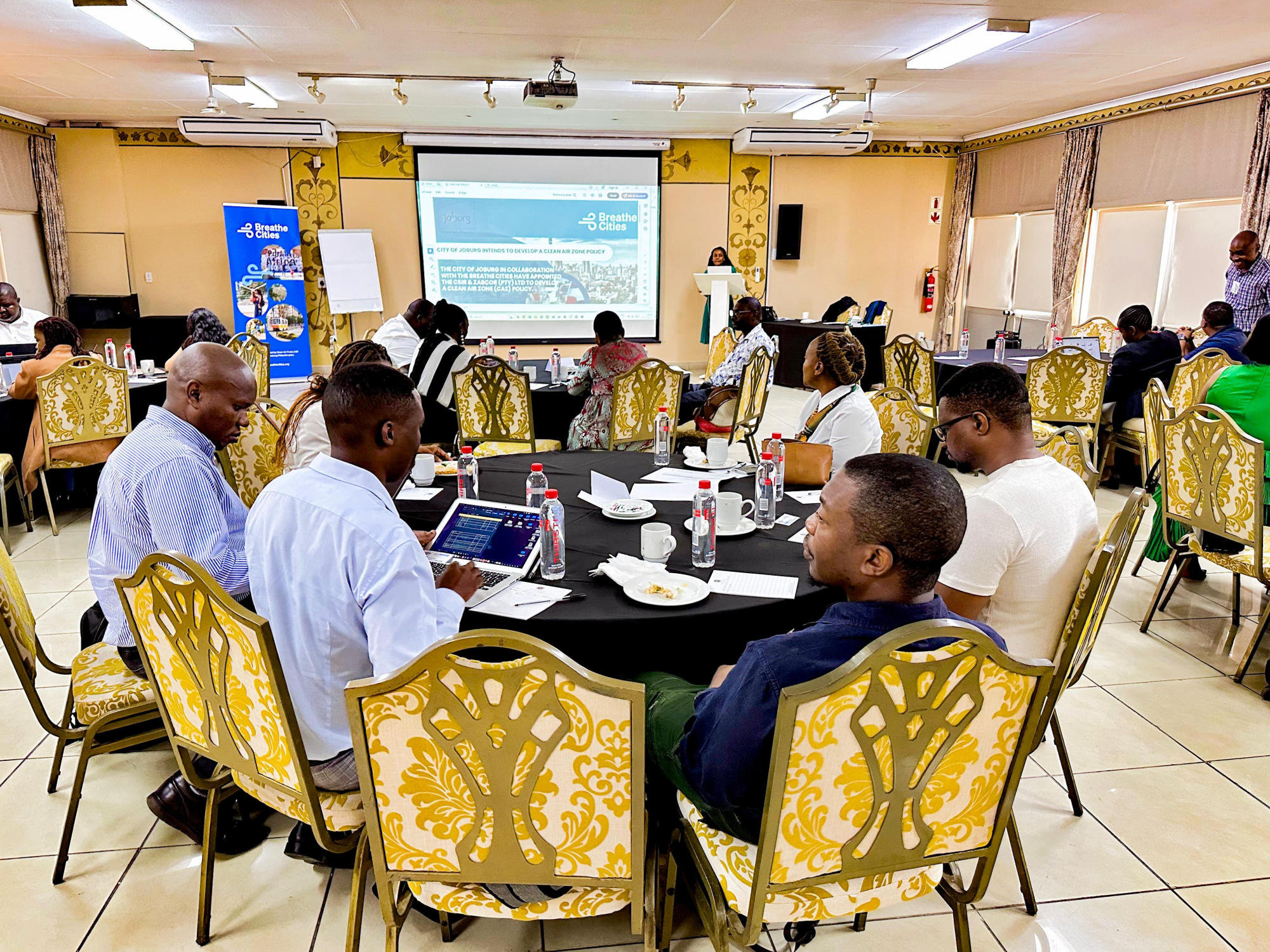
The CSIR and environmental consultancy Zabcor have teamed up to help the City of Johannesburg with the development of a Clean Air Zone Policy to help the metropolis manage air pollutants that negatively impact human health.
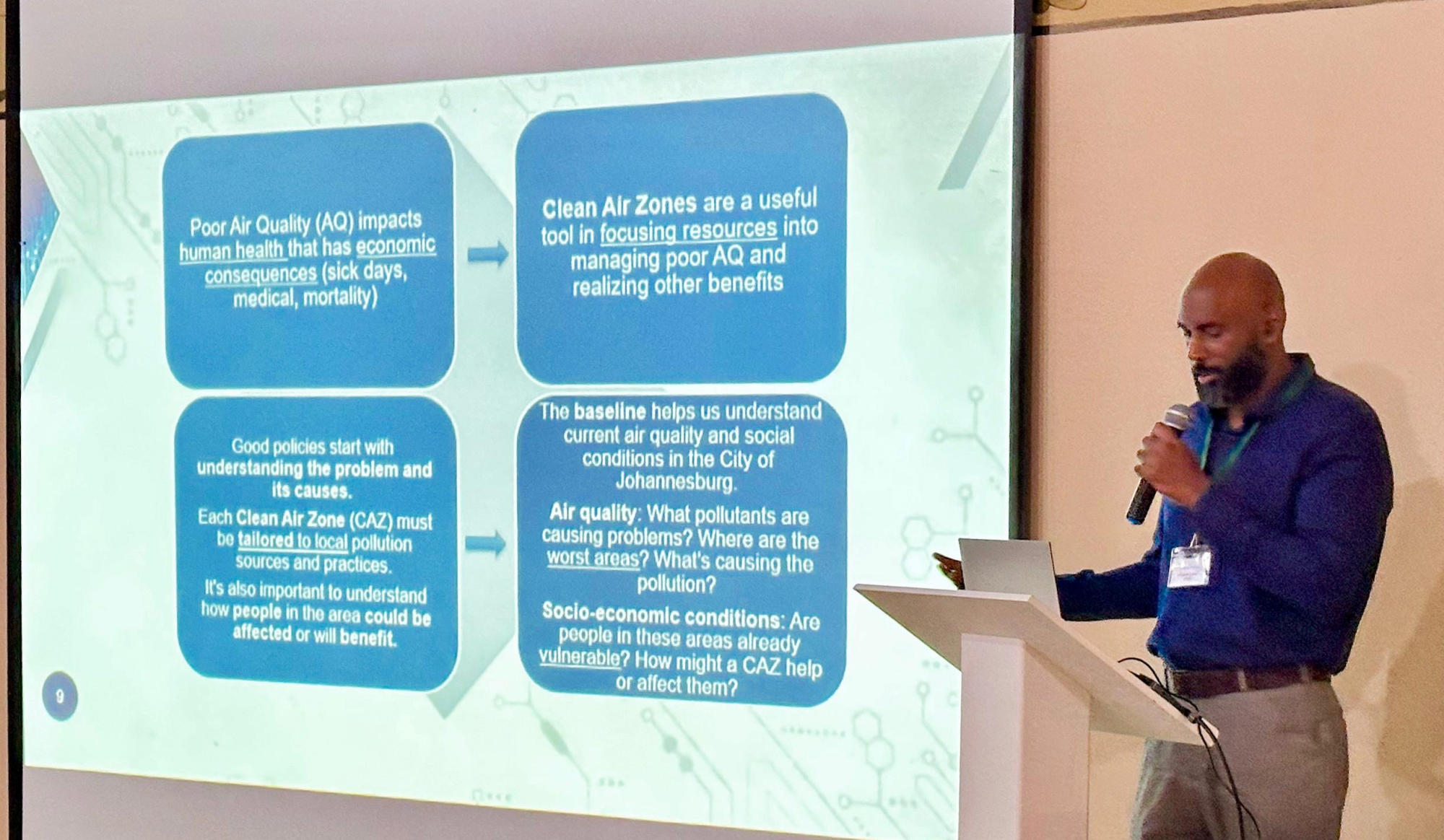
Teams met for the first time in mid-September 2025 to present the initial findings of a study commissioned by Breathe Cities, that focuses on a baseline assessment of air pollution in Johannesburg.
“The Clean Air Zone Policy is being proposed as a targeted instrument, since air pollution has been identified as a major factor impacting the health and well-being of residents - disproportionately affecting vulnerable and historically marginalised communities,” says CSIR Climate and Air Quality Modelling Research Group Leader, Dr Nkanyiso Mbatha.


Reduced air pollution would deliver immediate benefits for communities while also contributing to climate resilience. CSIR experts in air quality and climate modelling are playing a central role in developing the baseline assessment and shaping the policy. They analyse air quality and socioeconomic data and use their skills in modelling to identify key pollution trends and hotspots. These models simulate how the air pollution sources must change to achieve cleaner air. “These insights provide the scientific foundation for targeted and effective interventions as part of the Clean Air Zone Policy,” says Mbatha, who is leading the project.
The workshop fostered constructive dialogue, demonstrating strong stakeholder interest and a commitment to improving air quality in Johannesburg. “These engagements are essential for fostering transparency, building trust and ensuring that the policy development process is inclusive and participatory,” adds Mbatha. He emphasises that by embedding public engagement at the core of policymaking, the team aims to co-create equitable, evidence-based and sustainable solutions for air quality management and climate change mitigation.