The CSIR has called for official measures to give consumers confidence in plastic materials labelled as biodegradable and compostable. Researchers say that the CSIR can scientifically test plastic products in line with international standards at its biodegradability testing laboratories, which will provide assurance that products can be composted under home or via industrial conditions.
“Our lab is moving towards ISO17025 accreditation, which would allow traders or manufacturers to obtain certification stickers or logos on their products based on independent test reports from the CSIR,” says Sudhakar Muniyasamy, who heads up the CSIR’s biodegradation testing laboratory. “This would give the public a sense of trust in the biodegradability claims of a product."
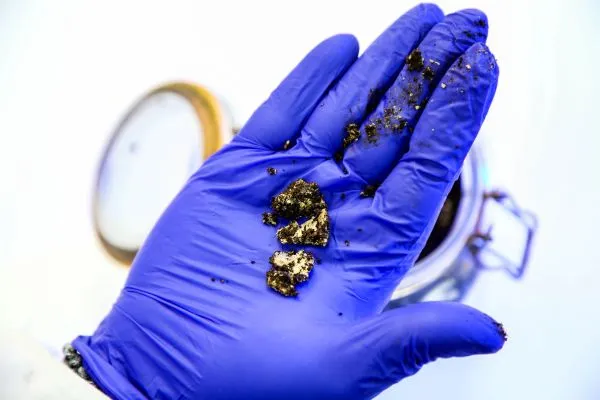
He says South African consumers should be wary of compostable microwavable containers, carrier bags, pet food packets, as well as takeaway boxes, straws and cups, that claim to be compostable.
“Compostability labelling is a major step towards combatting misinformation about biodegradability,” he says. “This is because many products are currently mislabelled as plastic-free, eco-friendly, earth-friendly or sustainable. Other products also do not clearly indicate whether a product may be safely composted at home, or if it must be binned for specialised industrial composting.”
In some cases, this mislabelling may be intentional “greenwashing”, where companies deceptively market their products as more eco-friendly than they really are. However, Muniyasamy cautions that in South Africa’s nascent industries, mislabelling is often not malicious, but rather because manufacturers, importers, distributors and consumers lack awareness and knowledge about the different standards of biodegradability.
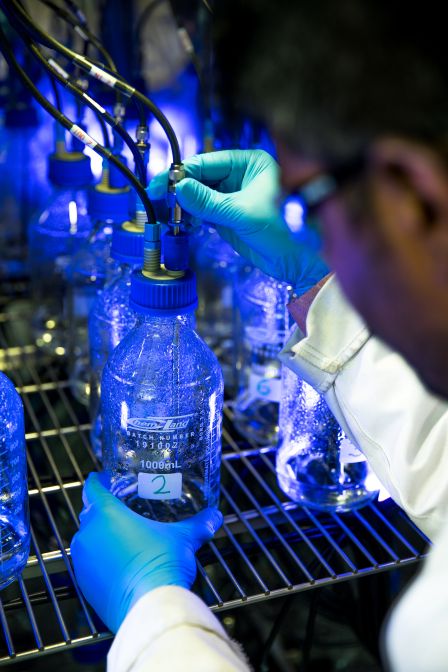


CSIR researchers perform a carbon dioxide mineralisation test on bioplastic sheets under compost and aqueous media conditions, using automated respirometric techniques. The CSIR biodegradation testing facility can test the biodegradation conditions of any single-use plastic products beyond packaging, including how long the material will take to biodegrade in compost, soil, freshwater, marine water or anaerobic digestate.
Muniyasamy says labelling will therefore protect both consumers and suppliers. He adds that in general, biodegradability testing and certification help to reduce landfill waste by recycling organic materials, to decrease methane emissions and to improve soil health.
“The CSIR biodegradation testing facility is the only one of its kind in Africa and we work closely with regulatory bodies like the South African Bureau of Standards (SABS) to ensure both environmental and consumer protections, and to support the local biodegradable plastics manufacturing industry,” says Muniyasamy.
“In fact, our team is developing the official local standards for biodegradation in South Africa.”
The facility can test the biodegradation conditions of any single-use plastic products beyond packaging, he says, including how long the material will take to biodegrade in compost, soil, freshwater, marine water or anaerobic digestate.
“We are also training young people in the science of biodegradation under these different conditions, and on the importance of certifiable biodegradation standards to protect consumers,” he says. “This is so that as a country, we can make sure these standards are actually brought into local manufacturing with those young people who enter the job market.”
Muniyasamy says the laboratory has already confirmed the compostability of several prototype single-use plastic materials developed at the CSIR, including mulch films used in pineapple farming, medical diagnostics kits and surgical aprons and heat-stable food packaging.
When these products are licensed to local manufacturers, the CSIR’s independent and scientific test results will provide an endorsement of biodegradability claims to put the public at ease.
More information about our research, facilities and services: Nanostructures and advanced materials
Published 23 February 2026