The recent surge in typhoid fever cases in parts of the City of Tshwane is unlikely to have been caused by treated drinking water supplied by the municipality and was more likely driven by exposure to untreated raw or river water, or by other environmental or behavioural factors. This was the finding of CSIR microbiologists who assisted the City of Tshwane with targeted water quality investigations in Hammanskraal, Pretoria.
Water testing detected no Salmonella in the municipal system, effectively ruling out the city’s water supply as the source of the outbreak.
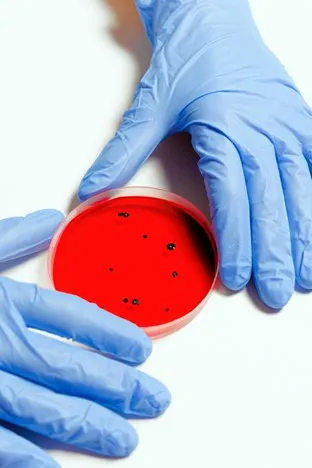
These tests were conducted in response to earlier concerns about the area’s water and sanitation infrastructure.
Between July and October 2025, a sharp incline was observed in typhoid cases, a gastrointestinal disease. In the period 13 to 19 October 2025, health authorities
confirmed 14 cases in the Bronkhorstspruit area and 11 cases in the Hammanskraal area.
Typhoid fever is caused by infection of the bacterium Salmonella enterica subspecies enterica, including serotype Typhi or serotypes Paratyphi A, B or C (NICD, 2025[1]). It spreads when faeces from an infected person contaminate food or water, which is
consumed by another person. The bacterium lives in the gut of infected patients.
With testing done at the CSIR’s Microbiology Laboratory[2], Wouter le Roux and Lisa Schaefer assessed whether the municipal water supply contributed to the outbreak and evaluated the safety of water at the point of use.
“On Monday, 10 November 2025, we collected water samples from ten locations in Hammanskraal,” says Schaefer, a CSIR senior researcher. “Five point-of-use samples were from public access sites, and five samples from treatment facilities, including final treated water, pre-distribution treated water and raw water.” The locations where the samples were taken included the Temba Water Treatment Works, Magalies Water, tanker-delivered water, Kudube/Leeuwkraal Dam (which is used for drinking water
production) and various taps accessible to the public in Hammanskraal. The samples were analysed within 24 hours for faecal indicator organisms and for pathogens associated with typhoid fever. “Many of these areas receive drinking water from water utilities that extract and treat water from Kudube Dam or the Pienaars River, while other areas that lack an adequate piped water supply are being serviced by tankers,” says le Roux, a CSIR senior researcher.
Key findings from their research indicate no pathogenic bacterial contamination
occurred at the point of use, indicating that the drinking water supplied by the
municipality and consumed by the public was not the source of the recent typhoid cases. The poor raw water quality at the Kudube/Leeuwkraal Dam poses a high-risk scenario, as any treatment failure at Temba Water Treatment Works could directly
expose consumers to harmful pathogens.
Certain point-of-use samples exhibited increased levels of total coliforms, suggesting that there may be insufficient residual disinfection (e.g. low chlorine levels) during
distribution, or post-treatment or that contamination may have occurred at public taps due to unhygienic user practices. The water tests found no Salmonella in municipal
supplies, ruling out the city’s water distribution system. Sporadic cases of Salmonella prevalence are expected across the country throughout the year, with seasonal spikes expected. Symptoms associated with typhoid fever are high fever, chills, appetite loss, constipation and/or diarrhoea, as well as muscle and stomach pain. Typhoid fever can be fatal depending on the age of the patient, the presence of malnutrition and if the illness is severe or untreated. Typhoid is treatable with antibiotics, although increasing resistance to antibiotics makes treatment more complicated. When an infected patient fails to wash their hands after using the restroom and touches something that another person may eat or drink, typhoid may be spread. Unhygienic sanitation practices and exposure to contaminated water increase the risk of becoming infected.
Typhoid fever is a treatable condition and a preventable disease through access to safe water, adequate sanitation and hygiene practices. “We recommend rigorous and heightened operational oversight and continuous monitoring to prevent treatment failures at Temba Water Treatment Works,” says CSIR Water Research Centre Manager Dr Rembu Magoba. “To improve source water quality, we recommended that additional pollution control measures are implemented in the Kudube Dam catchment by addressing upstream contributors of microbial contamination. In most instances, harmful microbes come from the influx of untreated or poorly treated sewage, and this carries a significant risk to downstream users.”
To remain vigilant in the prevention of typhoid outbreaks, authorities also need to seek alternative raw water sources for the Temba Water Treatment Works, where feasible, by reducing reliance on highly contaminated surface water, which has to undergo extensive treatment. They also have to enhance residual disinfection management in the distribution network to maintain microbial control up to the point-of-use. Furthermore, authorities should promote effective hygiene practices at communal taps and tanker distribution points through community awareness campaigns and improve water infrastructure.