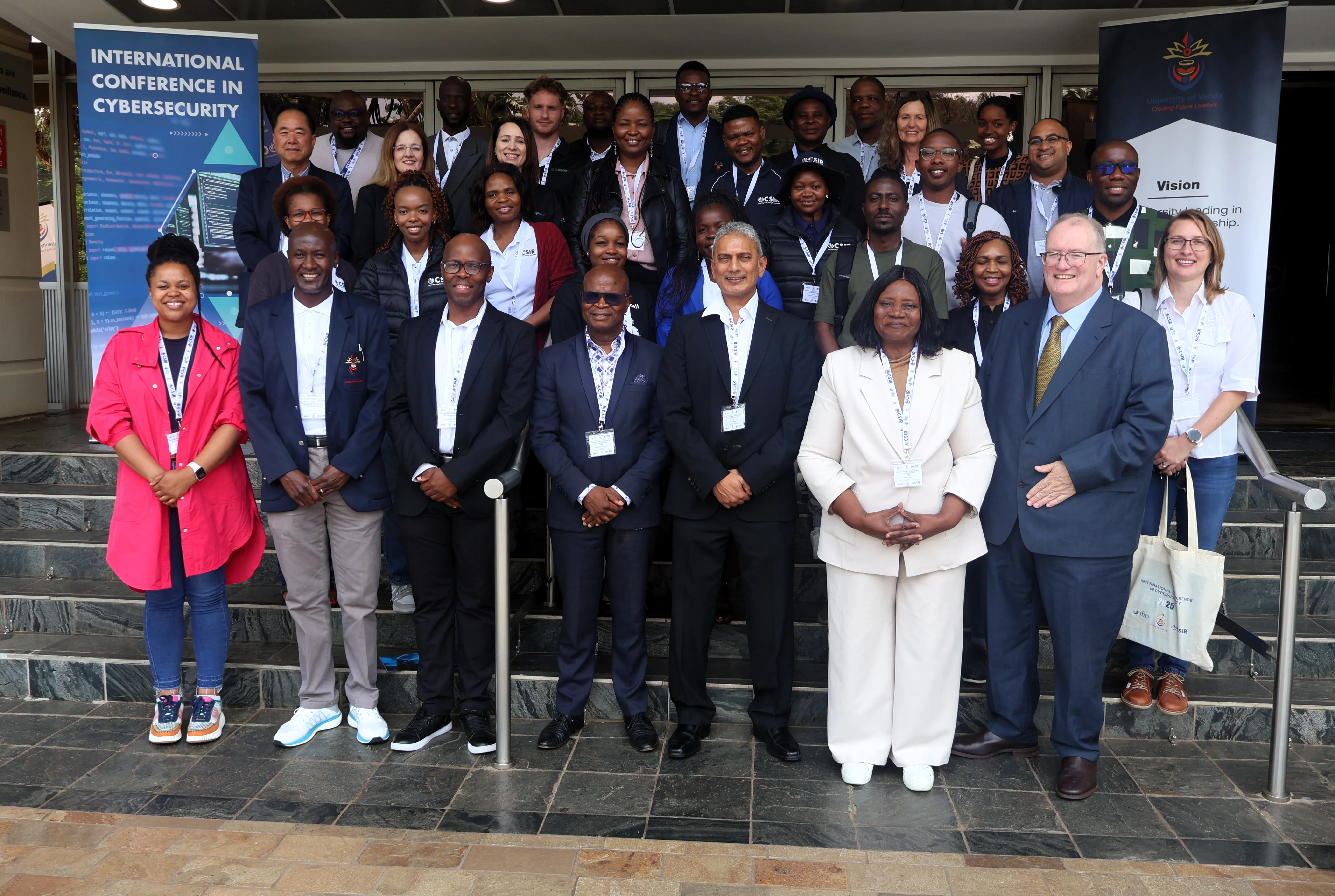
IFIP-UNIVEN-CSIR International Conference in Cybersecurity 2025: Building digital resilience and academic support
The inaugural IFIP-UNIVEN-CSIR International Conference in Cybersecurity 2025, co-hosted by the Council for Scientific and Industrial Research (CSIR) and the University of Venda under the auspices of the International Federation for Information Processing (IFIP) took place in Pretoria, bringing together global experts, researchers, policymakers and industry leaders to engage with the evolving challenges of protecting digital ecosystems.
Held from 8 to 12 December, the conference featured a hackathon, a Master’s and PhD colloquium, and the main conference sessions, all aimed at advancing innovative approaches to cybersecurity. The peer-reviewed papers from the conference have been published as a Springer Conference Proceedings, ensuring international visibility and academic impact of the research presented.
The conference served as a dynamic platform for knowledge exchange, addressing critical themes such as emerging cyber threats and trends, critical infrastructure security, cyber resilience and risk management, artificial intelligence and machine learning in cybersecurity. Other themes featured at this conference include policy and compliance, human factors and social engineering, and cybersecurity in peace and conflict. Delegates also examined cyber warfare and the future of cyber defence.
The conference also featured a cybersecurity hackathon that attracted more than 86 student participants. Sponsored by AdaptIT and TakeNoteIT, with support from the Department of Science, Technology and Innovation, and Cisco, the Hackathon provided students with hands-on exposure to real-world cybersecurity challenges.
Sepanki Pheto, Acting Executive Cluster Manager: Defence and Security, delivered the opening address and welcomed guests to the conference, “One of the most significant and important aspects of this conference is its focus on capacity development. The inclusion of the Master’s and PhD colloquium underscores our collective responsibility to build the cybersecurity skills pipeline that our country needs urgently. We are particularly encouraged by the strong participation of the emerging scholars and researchers who carried the torch of cybersecurity research into the future.” He shared that the conference provided a platform to engage on national priorities, including the strategic role that cybersecurity played in defence and economic development. The presence of the South African National Defence Force signified the important role of this conference in discussing issues of national importance.
A key highlight of the conference was the gala dinner, which placed strong emphasis on nurturing the next generation of academics. Speakers reflected on the reality that the path to becoming an academic is often lonely and requires sustained support. The IFIP-UNIVEN-CSIR platform was recognised as a vital support structure that empowers emerging scholars. Through the Master’s and PhD colloquium, young researchers received mentorship, exposure and opportunities to present their work to an international audience. The evening concluded with awards recognising outstanding contributions by participants.
Central to the conference discussions was the understanding that cybersecurity culture is shaped by values, beliefs, attitudes and behaviour, whether at home, in schools or within communities. While awareness campaigns and education play an important role in helping people understand cyber threats, knowledge alone is insufficient. Individuals must also understand why cybersecurity matters and be equipped with the practical skills required to protect themselves, their data and their digital infrastructure.
Despite this understanding, human behaviour often does not align with best practices, underscoring the complexity of cultivating a strong cybersecurity culture. This reality highlights the importance of continued research to better understand human behaviour and identify effective ways to influence it positively. To address this challenge, researchers emphasised the importance of introducing cybersecurity education early. Initiatives such as the Cyber Smart Squad focus on foundation-phase learners, using relatable concepts and storytelling to instil positive cyber values and behaviours from a young age. By embedding cybersecurity principles early, learners are able to build a strong foundation that supports more advanced learning later in life.
Ultimately, cybersecurity is not solely an academic or technical concern; it is a national and societal issue that affects multiple sectors, including healthcare, finance and government. Building a sustainable cybersecurity culture requires early education, practical exposure, inclusive access and coordinated collaboration across sectors.
The IFIP-UNIVEN-CSIR International Conference in Cybersecurity 2025 reinforced the critical importance of collaboration across academia, industry and government in building resilient digital infrastructures. By fostering dialogue and supporting emerging academics, the event not only advanced cybersecurity knowledge but also strengthened the human capital required to safeguard the future. As cyber threats continue to grow in sophistication, platforms such as this conference remain essential in shaping global discourse and driving solutions that protect critical systems worldwide.