Schmidt Sciences awards the CSIR with funding for global carbon cycle research in the Southern Ocean
South Africa’s national ocean- climate science programme, the Southern Ocean Carbon - Climate Observatory (SOCCO), has received funding from Schmidt Sciences to join a global interdisciplinary team for research on the global carbon cycle’s influence on climate change. SOCCO’s participation falls under the Constraining Ocean Carbon with Optimised Observing (COCO2) project – one of four projects initially funded within the Virtual Institute for the Carbon Cycle (VICC), an initiative that aims to reduce uncertainty in the global carbon cycle by an order of magnitude to inform effective climate policy and solutions.
Announced in October 2025, the VICC initiative was created by former Google Chief Executive Officer Eric Schmidt and his wife, Wendy, whose philanthropic investment has allocated up to 45 million dollars over the next five years towards research that advances human understanding of the global carbon cycle, driving a changing climate. Schmidt Sciences’ long-term, flexible support aims to enable scientific breakthroughs rather than incremental advances.
More than 170 submissions were received in response to the call launched in 2024, with only four pioneering research initiatives selected. These include the first on-site measurements of carbon flux in the Congo Basin region; research on annual and decadal land-based carbon budgets; quantifying the impact of permafrost thaw in Arctic and Boreal ecosystems on greenhouse gas budgets and finally, the COCO2 project, which improves observing emissions of carbon dioxide (CO2) flux in the Southern Ocean.
The COCO2 project, which the CSIR partners on, is co-led by Adrienne Sutton from NOAA’s Pacific Marine Environmental Laboratory and Galen McKinley from Columbia University, with an additional partner institute being the Commonwealth Scientific and Industrial Research Organisation in Australia.
The project aims to improve measurements and understanding of the Southern Ocean’s carbon sink by deploying advanced, model- and artificial intelligence-informed adaptive observations of CO2 flux on uncrewed surface vehicles (USVs) that circumnavigate the Southern Ocean, collecting critical ocean carbon flux data.
“This marks the beginning of a multi-year engagement that places us at the centre of a globally coordinated effort to close a major carbon-cycle knowledge gap,” says chief researcher Dr Sandy Thomalla. “By quantifying the ocean’s uptake of anthropogenic CO2, this work strengthens our understanding of a process central to moderating global warming.”
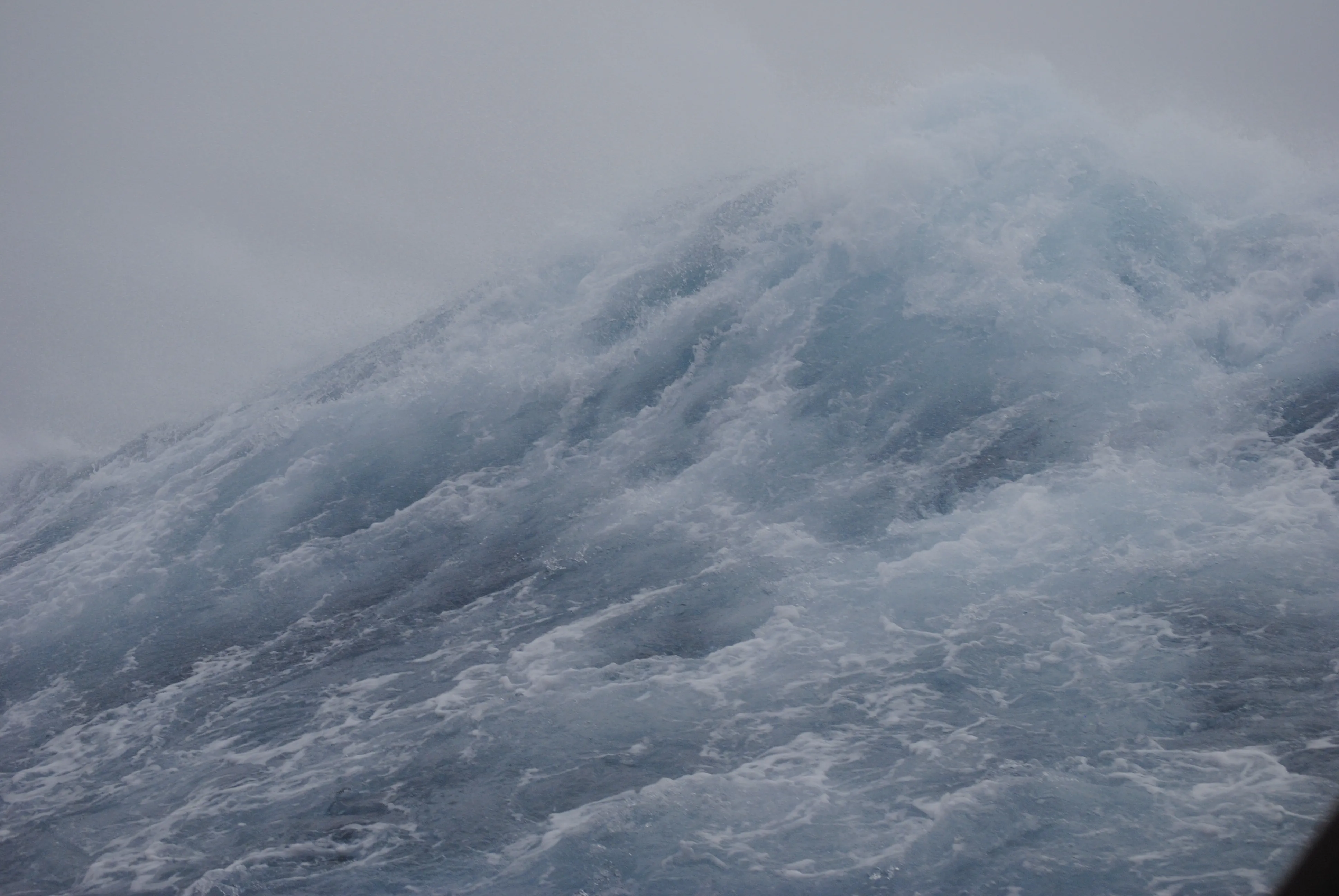
“One of the biggest challenges of developing a deeper understanding of the dynamics in the Southern Ocean is simply a lack of data, owing to the extreme conditions in the region,” says principal researcher Dr Sarah Nicholson. “USVs unlock access to the remote parts of the Southern Ocean, where there is little ship activity, allowing us to sample throughout the year, even during winter – a critical climate blind-spot. These data will provide valuable insight into carbon cycle processes.”
“Despite its outsized influence on the global carbon cycle, the Southern Ocean remains severely undersampled, particularly during winter,” says Thomalla. “We are looking forward to contributing to and collaborating with this excellent team of researchers and to deepening our long-term scientific presence in the Southern Ocean.”
The project is a critical step towards developing the tools and data needed to evaluate the Southern Ocean’s role in the global carbon cycle. By closing long-standing data gaps in this key region, the research will improve confidence in global carbon estimates and provide more reliable information for understanding future climate change.