Metal additive manufacturing
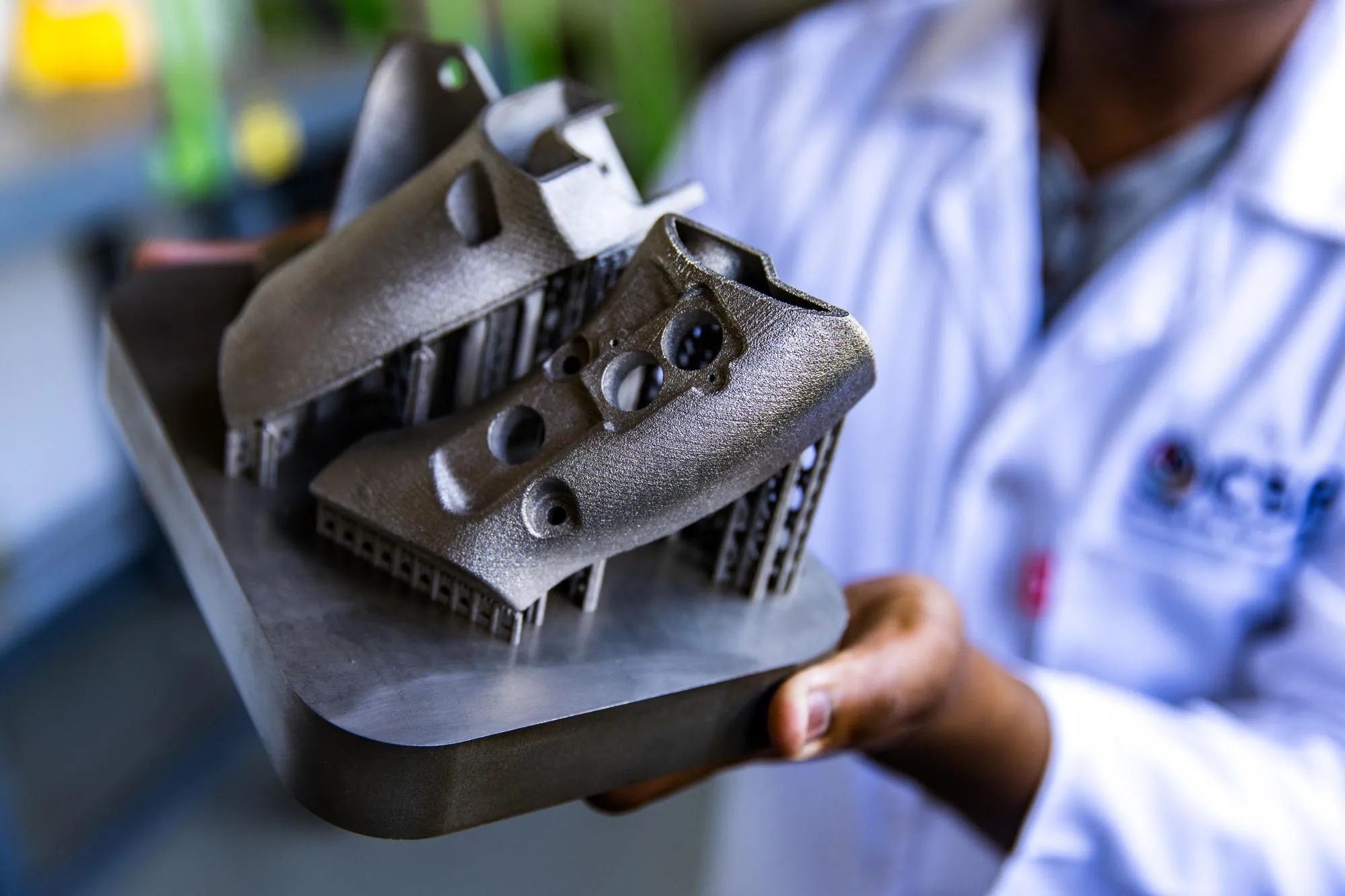
A major benefit of additive manufacturing is the ability to produce highly complex shapes and geometric features. Typically, any part that can be generated in three-dimensional (3D) format in a computer model can be printed layer by layer. This flexibility, combined with limited raw material wastage, makes this an attractive manufacturing option. Our work is not just printing; we undertake research into different materials and develop printers to support a strong local additive manufacturing capability.
Contact information:
Highlights
First locally produced powder for additive manufacturing
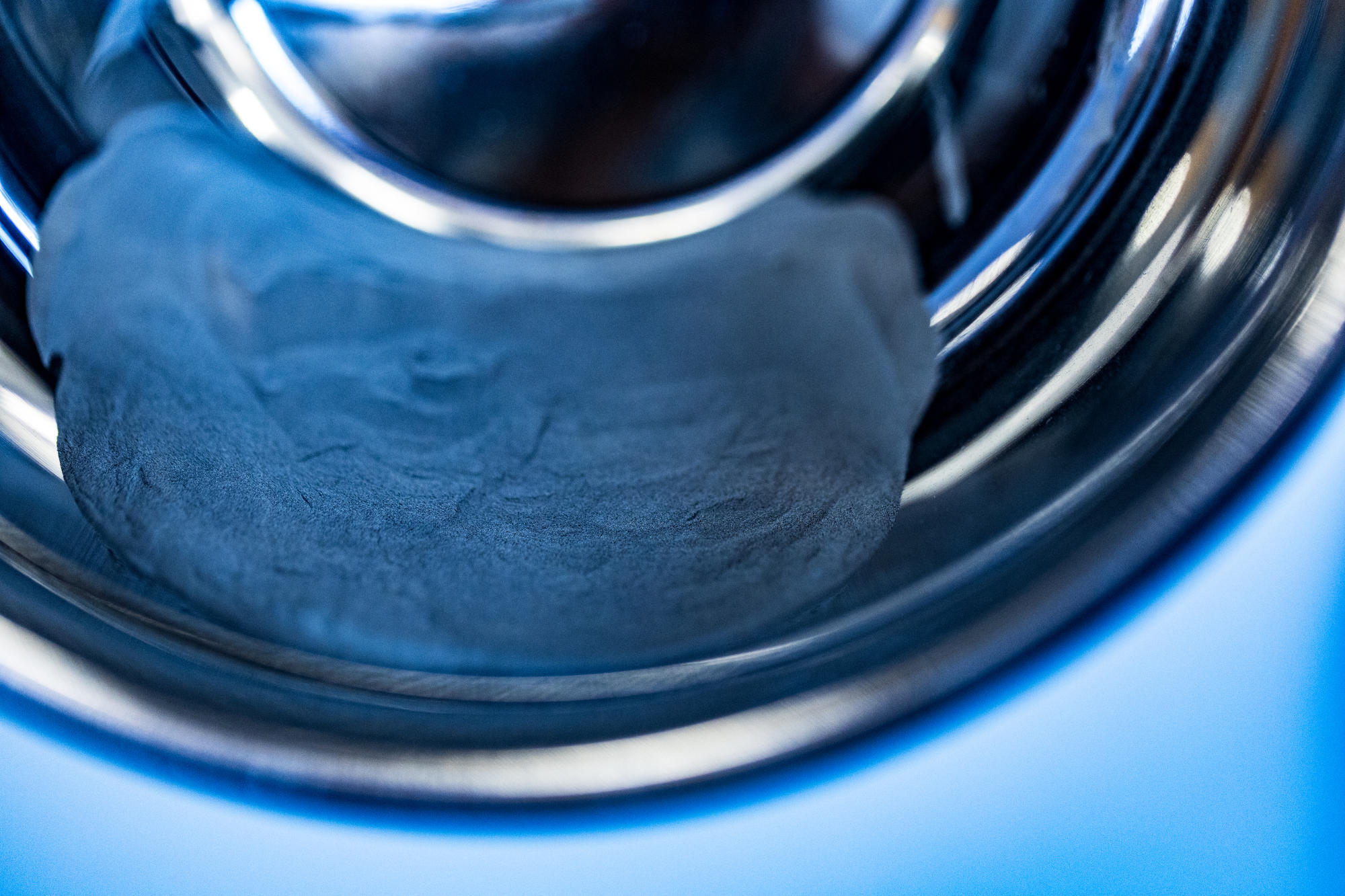
Following the commissioning of an ultrasonic atomiser facility, the CSIR has successfully produced 316L stainless-steel powder to be used in additive manufacturing projects. The capability is co-funded by the National Research Foundation, an entity of the Department of Science, Technology and Innovation. The high-quality powders have the required particle size, flowability and density for use in additive manufacturing, specifically for powder bed fusion techniques. Currently, South Africa depends on imports to access powders of this quality, which makes this a breakthrough for localised manufacturing materials.
The ultrasonic atomiser machine is designed to make various metal powders from reactive and non-reactive materials. The powder production process involves meticulous characterisation using advanced analytical methods to ensure consistency in particle size distribution, flowability and packing density.

Stalwart of laser-based 3D printing still in full motion
At the time of its introduction in 2011, Aeroswift was the biggest laser-based 3D printer of metal components for the manufacturing industry in the world. The technology is focused on titanium metal and the commercial aerospace and defence manufacturing sectors are key users. The project formed an important part of the national titanium beneficiation strategy, which aims to transform South Africa from an exporter of raw materials to an exporter of semi-finished or finished goods.
Our capabilities
Laser based powder-bed fusion
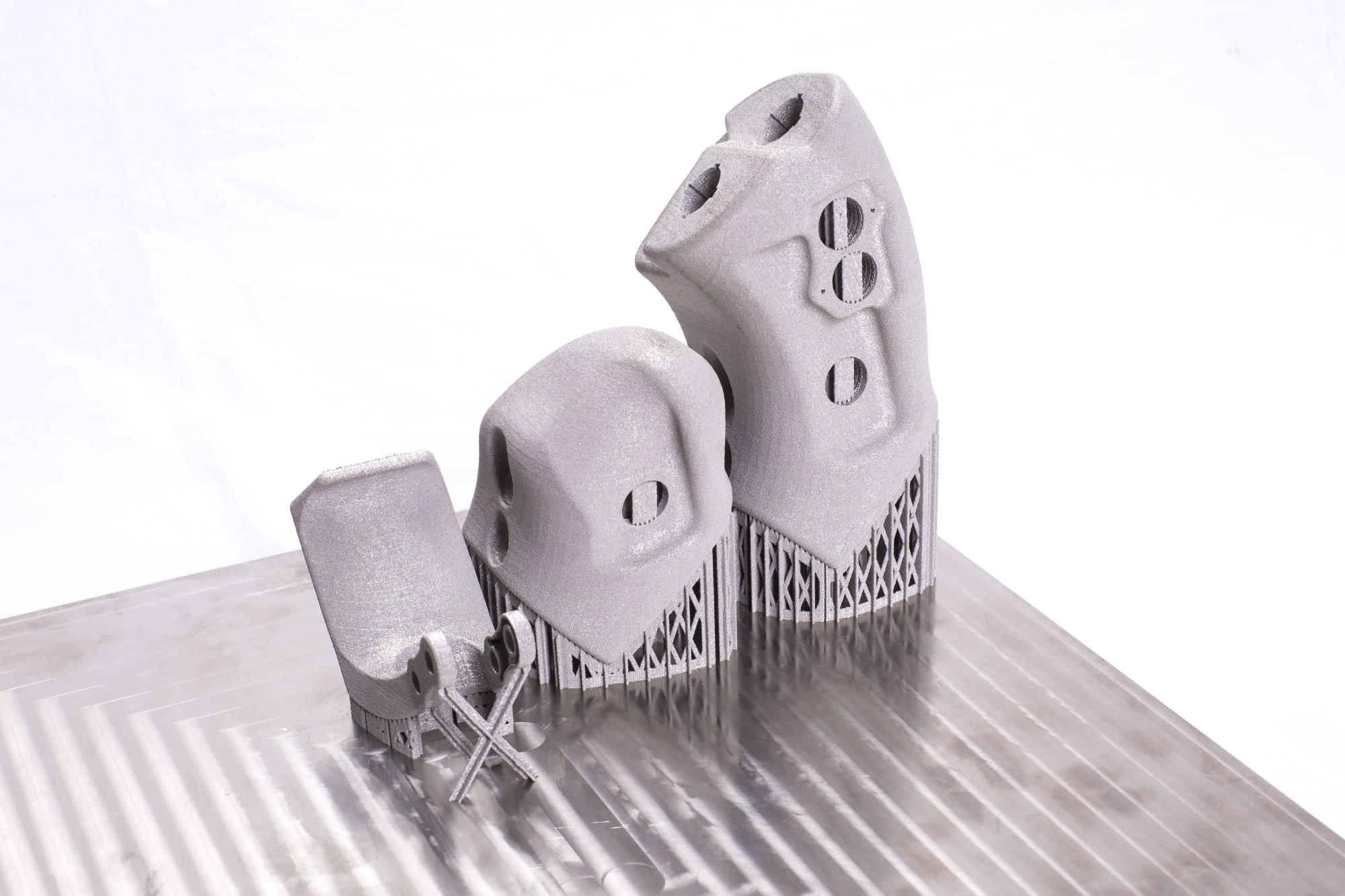
Powder bed fusion is not a new technology; it was originally used for prototyping in the thermoplastics industry. When used with a laser on high value metals such as titanium, stainless steels, aluminium, nickel- or cobalt/chromium-alloys, the technology offers significant advantages compared to machining and other manufacturing methods. For light-weighting, for example, complex lattice structures can be easily manufactured using any of the layering techniques of additive manufacturing.
Our facilities
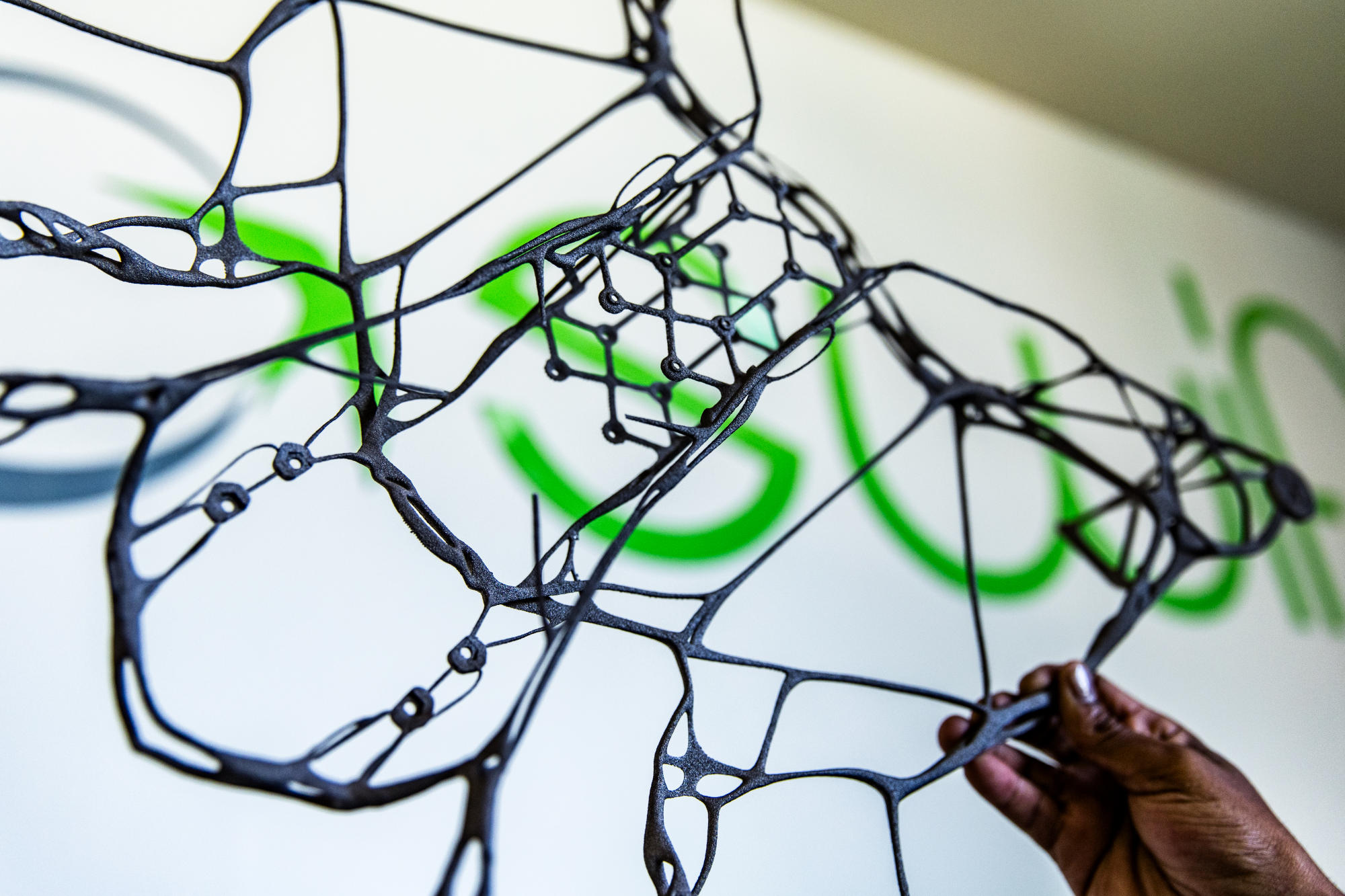
We produce high-quality parts at high printing speeds using a range of materials including titanium, aluminium, steel and a range of new alloys and polymers not available elsewhere.
Our facilities include custom selective laser sintering machines and can produce large parts up to the size 600 x 600 x 2 000 mm.