Climate and air quality modelling
We focus on using model simulations to enhance the understanding of present-day climate variability and to project future climate change across Africa, with a particular emphasis on southern Africa. Leveraging our extensive modelling expertise, we simulate emissions, ambient (outdoor) air quality concentrations and their associated impacts to explore the linkages between air quality and climate change. In addition, we conduct integrated vulnerability assessments.
Contact information:
Highlights
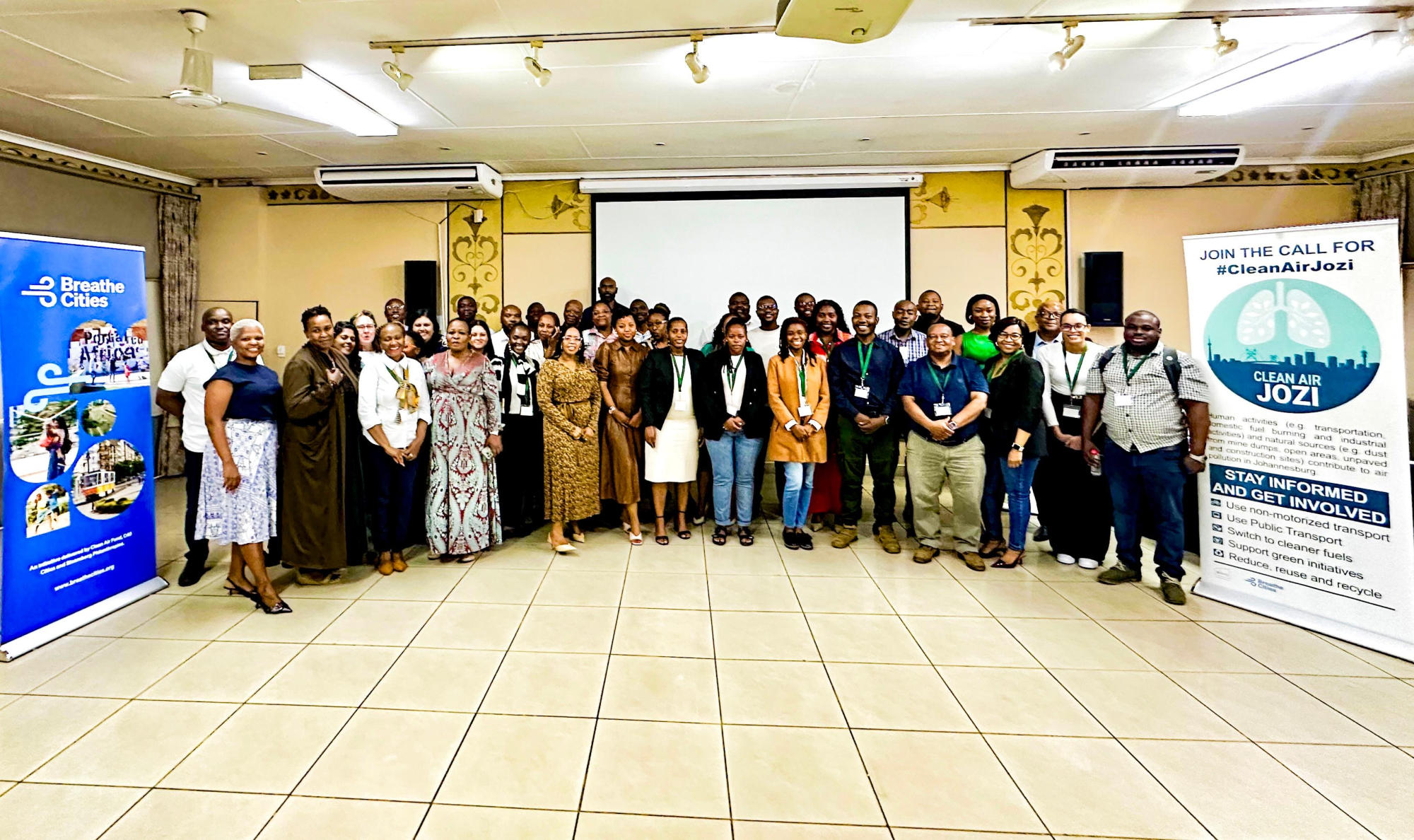
Air quality modellers called on to help improve air quality in Johannesburg
The CSIR and environmental consultancy Zabcor have teamed up to help the City of Johannesburg develop a Clean Air Zone Policy to manage air pollutants that negatively impact human health. Air pollution has been identified as a major factor impacting the health and well-being of residents – disproportionately affecting vulnerable and historically marginalised communities.
Read moreOur capabilities
We combine advanced modeling, observational analysis and computational tools to study and predict environmental conditions. This capability equips us to conduct global and regional climate simulations, downscale data for high-resolution local projections and analyse extreme events and sector-specific climate impacts.
The group develops emission inventories and applies dispersion and chemical transport models for air quality forecasting. We integrate ground-based and satellite observations with statistical and machine learning methods to improve accuracy. This work supports urban planning, health risk assessment and policy interventions, leveraging high-performance computing, geographical information systems and visualisation tools to deliver actionable insights for sustainable development and environmental management.
-
State-of-the-art climate modelling (in collaboration with the Commonwealth Scientific and Industrial Research Organisation):
- - Radiative forcing
- - Dynamic aerosol effect
- - Dynamic river-routing scheme (feeds freshwater to oceans)
- - Terrestrial carbon dioxide flux (vegetation-atmosphere interaction)
- Seasonal forecasting
- Regional downscaling
-
Chemical transport modelling of atmospheric composition:
- - Long-term, multi-year simulations
- - Source tracking
- - Scenario modelling
- - Sensitivity analysis
- - Quantifying air quality impacts
-
Emissions modelling and inventories:
- - Covers all non-industrial sectors, including on-road vehicles, biogenic volatile organic compounds, domestic fuel combustion, wind-blown dust and informal waste burning
- - Scenario development and associated emission estimation
- Air quality management planning
- Stakeholder training, capacity building and custom solutions in climate risk management, data science, machine learning and deep learning
Our research
We perform seamless climate model simulations. This involves conducting statistical and dynamic downscaling experiments of climate change projections, as well as medium- and short-range numerical weather predictions using a state-of-the-art Earth System Model-based (ESM) framework. The ESM-based decision-support information we provide includes climate timescale projections, short- to medium-range early warning and customised advisory products to help economic sectors build resilience to weather variability and climate change-induced hazards.